Daybreak to Dead-of-Night Hugo Film Festival
Notes on the Official Selections
-
The spark for this year’s theme and selections comes from John Wayne. Now, I was already aware of John Wayne’s reputation as an archconservative, racist, and a collaborator with the House Un-American Activities Committee, but it was a surprise to me that the actor who is probably most associated with Westerns, also held a loathsome opinion on High Noon (1952) (which The American Film Institute ranks as the 2nd best Western of all time):
“Everybody says High Noon is a great picture because Tiomkin wrote some great music for it and because Gary Cooper and Grace Kelly were in it. So it's got everything going for it. In that picture, four guys come in to gun down the sheriff. He goes to the church and asks for help and the guys go, "Oh well, oh gee." And the women stand up and say, "You're rats. You're rats. You're rats." So Cooper goes out alone. It's the most un-American thing I've ever seen in my whole life. The last thing in the picture is ole Coop putting the United States marshal's badge under his foot and stepping on it. I'll never regret having helped run Foreman out of this country.”
This quote from an infamous interview with Playboy in 1971 got me thinking, if John Wayne has this low opinion of High Noon, ‘what other Westerns would this guy just hate?’ And I found the idea of a list of great Westerns that John Wayne would despise (for his shitty political reasons) very amusing. Rest in piss Marion! (Read this brief article if you still aren’t persuaded that he sucks.)
So, naturally, I went around looking for Westerns that featured feminist, queer, leftist, and diverse (Black, Native, Hispanic, Asian) protagonists or points of view. I wanted to see pushback against hegemony and conformity. I began by searching for Western subgenres that subvert its traditions. I guess it’s not really a subgenre (not listed on Wikipedia at least), but I started with Queer Westerns. Having already seen the most famous example, Brokeback Mountain (2005), I found a couple of others like Lonesome Cowboys (1968) and National Anthem (2023), and a few others that only hint at queerness, including Red River (1948) (a good thing John Wayne didn’t understand subtext), Calamity Jane (1953), and Johnny Guitar (1954). BFI has a list.
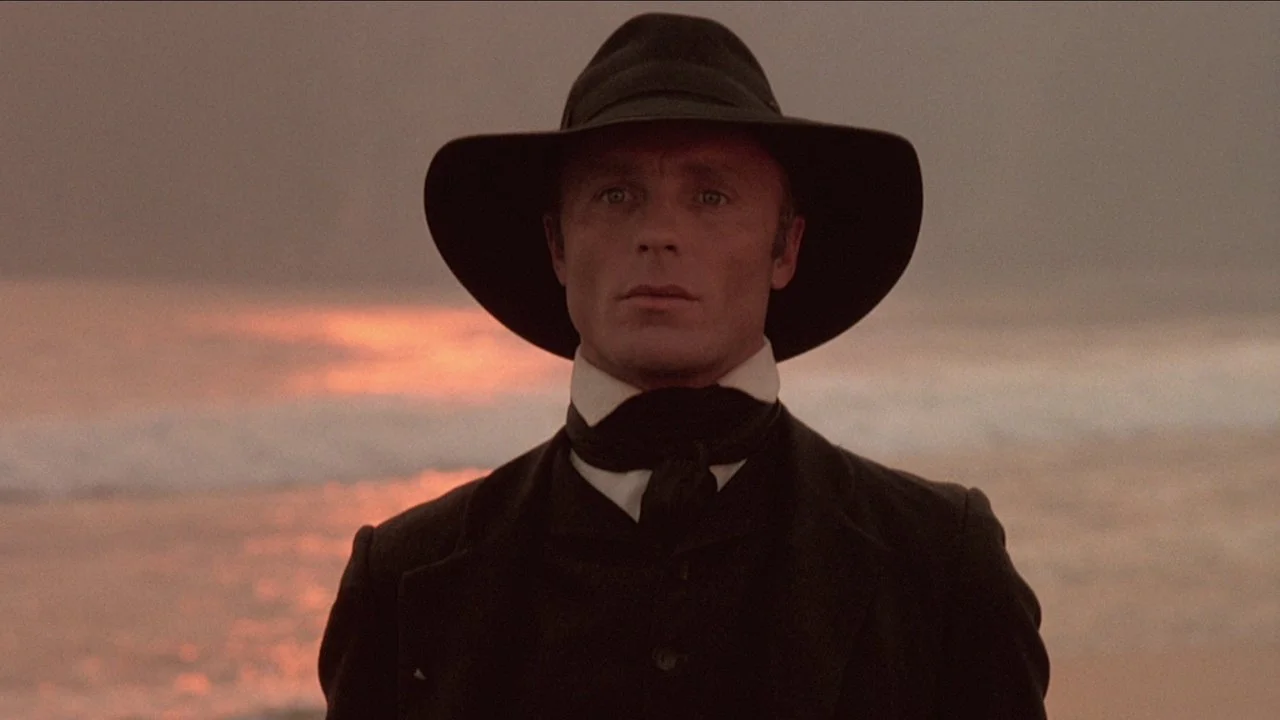
I bounced around after that based on different discoveries, and some quick searching led me to several Acid and Revisionist Westerns like Monte Hellman’s The Shooting (1966), Ride in the Whirlwind (1966), El Topo (1970), Walker (1987), Dead Man (1995), and another title my father-in-law told me to check out, the now out-of-print Zachariah (1971). These titles would end up serving as a kind of skeleton or outline to build out from.
High Noon (1952) was serving as a locus for the earliest period of film I wanted to examine for my lineup; roughly 1940-1959. I looked around for other films from this time period that could also work, and as usual, started with the Criterion Collection. The earliest was 1939’s Destry Rides Again, a comedy about a deputy sheriff (James Stewart) who hates guns. Forty Guns (1957) starring Barbara Stanwyck as the boss of a posse going head to head with the new Marshall, is an example from the later end of this period. With too many interesting films in-between to mention them all here, I ended up being captivated by an earlier Stanwycyk-starring film, The Furies (1950), a Western melodrama about a strong-willed daughter fighting her father and anyone else for what’s hers. While Forty Guns might seem like the more feminist film, Samuel Fuller, the film’s director conceded years later that the ending was overly conventional (allegedly due to studio pressure), and deemed it “unsatisfactory” after the bold narrative that precedes the finale. Whereas, The Furies, despite portraying more “domestic” concerns, may provide us with something slightly less traditional, while also providing a welcome tonal departure from some of the other movies on the schedule.
With the starting point out of the way, I knew exactly where I wanted the night to end. Having never seen a Jodorowsky film, but being well acquainted with his comics, this was the perfect opportunity to finally watch his surreal cult western, El Topo (1970). I’ve often saved the last slot in the schedule for challenging films (Belladonna of Sadness (1973), The Neon Demon (2016), Showgirls (1995), Climax (2018)), but I now have the opportunity for the midnight movie to be THE midnight movie. And if TL;DR, basically the first guy to screen the movie for general audiences was only allowed to show it after hours, it was a big hit, and generated a cult following, and this experience led to continued midnight movie screenings, and this was likely the start of the whole midnight movie culture. If you need to know beforehand what you are getting yourself into, this site seems to have you covered.
Next, I wanted to make sure I deliberately made room for a female director (you may remember that no such films were selected until the 4th year of the festival). There are two films that I’m very excited to watch, Meek’s Cutoff (2010) by Kelly Reichardt, and The Power of the Dog (2021) by Jane Campion. Both movies subvert the Western in their own way (no spoilers). Kelly Reichardt is a director that I want to like more than I do ( I’ve only watched Old Joy (2006) and Wendy and Lucy (2008), but both the descriptions of her films, and the accolades they garner keep me wanting to come back and try again. Take these two quotes about Meek’s Cutoff, and tell me your interest isn’t piqued:
“Taking for granted that Westerns have functioned consistently and predictably to reiterate or repudiate our collective mythologies about American values, masculinity and race, Reichardt’s contribution represents a significant upheaval.” - Screen Slate
“Reichardt strips away the sentimental psychology of the woman's movie as ruthlessly as she undercuts the hypermasculine romance of the Western.” - Ella Taylor for NPR
As for Jane Campion and The Power of the Dog, she’s a director I’m both more familiar with, having seen four of her feature films, and more positive on, both The Piano (1993) and Bright Star (2009) are amazing films (Sweetie (1989) is good too, but In the Cut (2003) is just ok). I never got around to watching The Power of the Dog in 2021 despite its nominations for Best Picture and Best Director (Campion won). The Hollywood Reporter’s film critics listed it 15th on their "50 Best Films of the 21st Century (So Far)" list, saying it is a “...brilliantly uncomfortable chamber piece about corrosive masculinity fed by sexual repression […] a psychodrama whose epic scope is echoed in its majestic landscapes.” But a woman and a Kiwi, can’t just make a western without ruffling a few feathers either. Renowned actor (and western aficionado), Sam Elliott felt the need to share with Marc Maron what he thought of it, as reported by Variety:
“Elliott called the film a “piece of shit” and seemed bothered by how the film deconstructs classic Western archetypes such as cowboys. Elliott compared Campion’s cowboys to Chippendale dancers who “wear bow ties and not much else.”” - VarietyThat’s some bullshit John Wayne energy right there. While The Stranger is a man of wisdom within the confines of The Big Lebowski (1998), I’ve made myself clear about what I think of these old timers and their hang-ups. Move along dude, your bad take only makes me want to watch it more.
As for black directors (another often overlooked demographic in my lineups), I had already known about Sidney Poitier’s debut feature film, Buck and the Preacher (1972) from its Criterion edition, and this film became a front-runner for inclusion not only due to Poitier, but also his co-star Harry Belafonte playing against type; both stars also produced the film (read a great essay on the film by Aisha Harris here). While, in my heart of hearts I knew it would be difficult to dethrone Buck, I did keep an open mind. Another film considered for this slot was Mario Van Peebles’s 1993 revisionist western, Posse, which has a divisive critical record, but luckily I came across a Richard Brody essay written in 2022 which extolls the film’s virtues, and makes a case for its consideration for the festival:“The story that Van Peebles tells (working with a script by Sy Richardson and Dario Scardapane) is a vast excavation of the crimes and sins on which the United States is based. It’s a tale of military adventurism, colonial expansionism, crony capitalism, deceitful political maneuvering, the repressive sham of law and order—and the underlying premise of white supremacy on which these abuses depend.”
I also hoped to include Jordan Peele’s contemporary horror-western, Nope (2022). I watched it in cinemas when it was released and was mesmerized by its visuals and how Peele managed to weave seemingly disparate narrative and genre elements into a cohesive, entertaining, and thought-provoking work. And like many of the films listed here, tackles the whitewashing of American history. Finally, I would be remiss not to mention Gordon Parks’s The Learning Tree (1969) which is sometimes included in lists of Black/African American Westerns, and as Odie Henderson puts in his essay about the film, “with its scenes of horse-riding and saddle maintenance, this often feels like a Hollywood western.” However, I became discouraged after doing more digging and realizing that perhaps it was too distantly connected to the genre; one of the more difficult aspects of curating this festival is that I haven’t watched nearly any of the films, which while being the point of the whole endeavor, makes it harder to categorize films like this one. One unexpected similarity shared between The Learning Tree and Buck, is the community depicted in both films, the Exodusters, African Americans who moved west after the Civil War (albeit at different points in time).
Since I had now selected two films from the 1970s, for the sake of temporal diversity, I couldn’t really consider any others, which meant cutting Robert Altman’s McCabe & Mrs. Miller (1971) and Sam Peckinpah’s Pat Garrett & Billy the Kid (1973). The more I read about Altman’s film, the more intrigued I became, I’ll leave these two quotes from Nathaniel Rich’s essay here as teasers, and if you feel so inspired, read the whole thing (and watch the movie):
“...The defiance Altman brought to his “antiwestern” was radical enough to derange his Hollywood studio bosses. To them, McCabe & Mrs. Miller (1971) was not merely antiwestern; it was anti-rational, anti-audience, antifilm.”
“By tradition, the western hero is a purposeful man, determined to defend his honor. But Beatty’s McCabe, anticipating Elliott Gould’s Philip Marlowe in Altman’s The Long Goodbye (1973), is powerless to control his fate and powerless to shirk it. He is desperate to escape—to be anywhere except for wherever he finds himself, no matter where that might be.”
I’ll also leave you with a teaser, by way of a quote from Steve Erickson’s essay on Pat Garrett and Billy the Kid:
“Garrett is Peckinpah’s greatest movie, an examination of how American power and greed corrode the stuff of freedom and friendship. “How does it feel?” Billy asks his old friend about selling out to the cattle barons (echoing a classic Dylan song in the process), to which Garrett wearily answers (echoing another Dylan classic), “Like times have changed.” Billy retorts, “Times, maybe. Not me.””
Posse had me thinking about the 1990s, or the late 1900s as Gen Z says. I came across three revisionist Westerns that interested me, perhaps mostly due to their directors, The Quick and the Dead (1995) by Sam Raimi, Lone Star (1996) by John Sayles, and Dead Man (1995) by Jim Jarmusch. Sam Raimi has a distinct flair as seen in his Evil Dead (1981-1992) and Spider-Man (2002-2007) films, and while he’s not my favorite director, he is fun. John Sayles is more of an unknown quantity to me, I have heard momentous praise for his film Matewan (1987), and I’ve heard good things about both Brother From Another Planet (1984) (which I may have watched many years ago), and The Secret of Roan Inish (1994), so when Lone Star was added to the Criterion Collection, it too got on my radar. Jim Jarmusch is a director who has fascinated me ever since I saw Coffee and Cigarettes (2003) in high school, but despite that, I’ve only watched one other film, Broken Flowers (2005), also good. His entire filmography interests me, so I really should get a move on it. The decision here was down to the two titles in the Criterion Collection (watching these films is a core objective of this festival after all), but only the Jarmusch film features a Native American/First Nations actor, Gary Farmer. AND a score by Neil Young.90s 🗹
The Criterion Collection’s 1960s offerings yielded a plethora of options, among them, Marlon Brando’s only directorial outing, One Eyed Jacks (1961), the aforementioned Monte Hellman helmed acid westerns, The Shooting and Ride in the Whirlwind (both 1966), and Black Dog, White Devil (1964) a Brazilian existential Western, were the frontrunners. The Marlon Brando and Monte Hellman films appeal to me initially due to their production. The One-Eyed Jacks production was apparently a shitshow, and any movie made with clashing artists, intervention from studios, and bombastic inexperience that ends up just working, is something I’ll want to watch. It’s great luck that such a movie also meets my brief:
“One-Eyed Jacks looks hard at western conventions through disbelieving eyes: the hallowed gospel of heroism and romance spied from the gutter or an unkempt graveyard. Cloaking primal-archetypal family conflict in bandit-versus-lawman drag—a sort of Gunfight at the Oedipal Corral—the film gives us a prodigal Billy the Kid type called Rio (Brando) seeking to even the score with his former mentor, now the respectable Sheriff Dad Longworth (Karl Malden), who abandoned him to the federales. Using this hoary gunfighter’s revenge saga as a prefabricated framework (where the main conflict is leavened with a dab of mariachi-ingenue romance), Brando delivers a slow, twisted, almost incantatory ballad of betrayal, stunted emotions, masculine cunning, unexcused violence, all-around deceit, and failed atonement.” - Howard Hampton
The Monte Hellman movies were shot back-to-back on location in Utah utilizing some of the same actors in a total of six weeks. This situation reminded me of favorites of mine, Flesh For Frankenstein and Blood for Dracula (both 1974), which were directed by Paul Morrissey, starring Udo Kier, and many of the same actors in back-to-back productions at Cinecittà in Rome in 1973. Having appreciated seeing how a company of actors, and a nimble director can take two scripts and with speed and confidence create a sort of duology provides a unique lens through which to watch a movie, and I didn’t expect another such opportunity. The Shooting and Ride in the Whirlwind seem interesting, and although their descriptions are straight forward, a deeper dive leads me to think they are more opaque than they first appear.
On the other hand, Glauber Rocha’s Black God, White Devil intrigues me not because of its production per se, but more due to its director, and the movement it helped to usher in. The film is an early entry to Brazil’s Cinema Novo movement aimed at a sort of decolonial takeover of Brazilian cinema. I haven’t watched any movies from this period of Brazil, but I find the subject matter and imagery of this movie super compelling. Decolonial, anti-authoritarian, and radical more than captures my chosen theme. For more context into many of the film’s elements, this essay by Fábio Andrade is a good read. After all my hemming and hawing, I’m taking the opportunity to include another international film here. So far, I have mostly encountered American (in the U.S.A. sense) films, so some variety in country of origin is welcome.
There are two films from the 1980s that I discovered also due to the Criterion Collection: The Ballad of Gregorio Cortez (1982) and Walker (1987). The Ballad of Gregorio Cortez sounds like a great film, and one that would be right at home in this year’s line up. A representative of the budding Chicano film movement, and shot with a documentarian flair “Olmos’s Gregorio Cortez represents a unique combination of traits for a western hero: strong yet sensitive, resourceful but caring, brave, passionate, and, when it comes to horses and family, emotional.” Charles Ramírez Berg goes into depth how innovative this film was when it was released in the early 1980s in this essay for Criterion (quoted above). Walker has a lot going for it too. First, Alex Cox’s prior film Repo Man (1984) is fantastic. Two,Walker was so political and violent that Universal studios, who spent $6,000,000 in production costs, refused to promote it. The politics that the studio found “upsetting” were critiques of the US supported intervention in Nicaragua in the 1850s and its parallels to the US intervention (the Contras) which happened contemporaneously with the film’s production in the 1980s. Additionally, during the 1999 Oscars, the star of the film Ed Harris, along with his wife Amy Madigan (Academy Award winner), openly showed disdain for Elia Kazan who was receiving an honorary Academy Award, by staying in their seats and not applauding. This was due to Kazan's naming of names before the House Un-American Activities Committee in 1952. Kazan’s actions resulted in his colleagues being blacklisted, for which Kazan never apologized. I stand with Ed, I mean sit in solidarity with Ed on this one. And if you want to read very intelligently written essays praising the artistry of this film, Linda Sandoval’s first hand account of the filmmaking process, and Graham Fuller’s film criticism have you covered.
At this point, I had eight films more-or-less selected. I began toying with the schedule and it was impossible to slot them all in without really truncating the breaks between movies, staring down the barrel of an intensely punishing viewing schedule, (the usual schedule is demanding enough), I had no choice but to cut one out. I ended up cutting The Power of the Dog (2021) as it was the longer of the two films directed by women (and the longest film I had selected), however this cut means there will be no 2020s representation. One thing I kept running into this year, is that many of the westerns I was most drawn to were over two hours long. Three movies were never really seriously considered because they were just too long:
The Assassination of Jesse James by the Coward Robert Ford (2007) 160 minutesThe Hateful Eight (2015) 188 minutes
Heaven’s Gate (1980) 217 minutes
Unfortunately, this penchant for longer films this year also means I was unable to include certain subgenres I was looking forward to slotting in. My first run-in with the Australian western was The Proposition (2005) by John Hillcoat; it is very good, and on the basis of its quality, I was looking at its genre-mates, Sweet Country (2017), The Tracker (2002), or The True History of the Kelly Gang (2019). The same goes for Asian Westerns also called Ramen Westerns (a term used to publicize 1985’s Tampopo), some that were in consideration were Thailand’s Tears of the Black Tiger (2000), Indonesia’s Marlina the Murderer in Four Acts (2017), South Korea’s The Good, the Bad and the Weird (2008) which stars Song Kang-ho (of Parasite (2019) fame), and Japan’s Sukiyaki Western Django (2007) directed by iconoclast Takashi Miike (Audition (1999), Ichi the Killer (2001)).
I had also hoped to include a horror or sci-fi western. I’ve mentioned Jordan Peele’s Nope (2022), but there’s also Bone Tomahawk (2015) directed by provocateur S. Craig Zahler. Sci-Fi Westerns were represented on the longlist by Westworld (1973), Mad Max (1979) - Australian, The Rover (2014) - also Australian, and Logan (2017).
One subgenre that you’ve probably noticed I haven’t mentioned is the Spaghetti Western. I decided to not include any since most people are familiar with the best and most famous example, the Dollars Trilogy and that famous Ennio Morricone theme, so I didn’t feel the need to include them.
With all that in mind, the final lineup comes down to: the 1950 Western melodrama helmed by Anthony Mann and starring Barbara Stanwyck, The Furies; Alejandro Jodorowski’s 1970 surreal acid Western that kicked off the midnight movie, El Topo; the slow-burn realism of Kelly Reichardt’s 2010 film, Meek’s Cutoff, that subverts the feminine and the masculine; Sidney Poitier’s 1972 directorial debut, Buck and the Preacher, reclaiming the Western and the West from a history of whitewashing; Jim Jarmusch’s 1995 revisionist black-and-white Western, scored by Neil Young, Dead Man; Brazilian director Glauber Rocha’s anti-authoritarian existential Western Black God, White Devil from 1964; finally, Alex Cox’s 1987 biopic/political satire Western-in-disguise, Walker.And if you want even more films to watch, all the movies mentioned in this essay and more can be found on my complete longlist on Letterboxd.
-
Year SIX! This year we’re looking at Romantic Comedies. But since the point (did you know there’s a point to all of this?) is to watch movies we haven’t seen, were previously unknown to me, or have, despite being well regarded, been on the backburner, we’re going to just ignore all the usual suspects. IGNORE THEM! Also, to make it more interesting, I want to focus on movies that are not traditional rom-coms in one way or another. Either they don’t conform to popular expectations of the genre, are tonally different, or in one, or many other ways feel, look, and represent the margins of what most people would think of when they hear “rom com”.
As always, I was starting with a few films in mind. Two big ones were The Lobster (2015) and The Worst Person in the World (2021). Simply hearing that The Lobster is an absurdist comedy by Yorgos Lanthimos was enough information to convince me. The Worst Person in the World piqued my interest because I really enjoyed the director Joachim Trier’s first feature, Reprise(2006). When Worst Person… was added to the Criterion Collection and described as “a liberating portrait of self-discovery and a bracingly contemporary spin on the romantic comedy,” I was ready to include it in the line up.
To flesh out the line up, I poured over the Criterion Collection. I was able to find a few ideas, but one notable discovery was the Albert Brooks directed (and starring) Defending Your Life (1991), also starring Meryl Streep. I had never heard of this movie, but the trailer really captivated me; a movie about two people falling in love in the afterlife!
As the year went on, I continued to keep an eye out for anything interesting that might work in this year’s festival. I learned about The New Black Film Canon list a couple of years ago and read about The Watermelon Woman (1996) and Losing Ground (1982) there. This quote from film critic Westley Morris about Losing Ground really inspired me to watch it, “Lovingly, fancifully made, never released, and therefore barely seen, Collins’ romantic thingamabob is powerfully, strangely alive. Collins died in 1988. This was her only movie. So, in its way: a tragedy.”
A few months ago, I learned of the director, Joan Micklin Silver, when two of her films entered the Criterion Collection: Crossing Delancey (1988), and Chilly Scenes of Winter (1979). Both are romantic comedies; Delancey is more typical, about two Jewish singles navigating love in Manhattan, and Chilly Scenes…, an anti-romcom about a man obsessed with his ex. While both are unique in their own ways, the latter film speaks more to my sensibilities.
Looking for other films that fit the brief turned up some titles like Amelie(2001), and Eternal Sunshine of the Spotless Mind (2004). Both of these films work, but I've already watched them, AND, maybe a lot of people have too. The longlist started to take shape with movies like Chasing Amy(1997), The Apartment (1960), Always Be My Maybe (2019), Palm Springs (2020), Me You and Everyone We Know (2005), and 2 Days in Paris (2007)… but I’ve watched all of these.
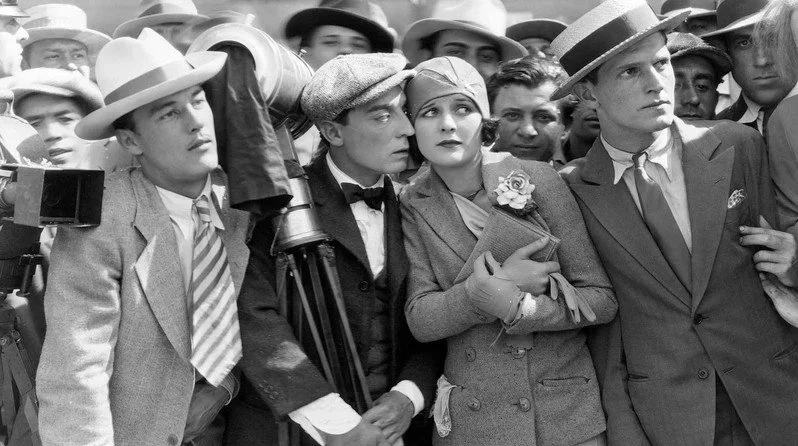
I intentionally sought out films from the infancy of the genre, as tropes were being born, and before they were codified. I had already watched It Happened One Night (1934) (loved) and Bringing Up Baby (1938) (hated), and identified quite a few interesting movies for the long list: His Girl Friday (1940), City Lights (1931), Trouble in Paradise (1932), My Man Godfrey (1936), The Awful Truth (1937), Holiday(1938), Woman of the Year (1942), The Philadelphia Story (1940), and The Lady Eve (1941). Believe it or not, by the late 30s, the rom com genre had already been firmly established, so I decided to narrow my search to a pre-Code film, and with some more digging, I turned up the Buster Keaton film The Cameraman (1928).
Heading into the 50s and 60s I realized there began to be a sort of drop of output in the genre. The few I came across before deciding to look elsewhere were, Sabrina(1954), A Lesson in Love(1954), That Touch of Mink (1962), and Marriage Italian Style(1964). These look great, but didn’t speak enough to the brief.
The 70s are interesting in that we start to get into New Hollywood territory. Harold and Maude (1971) and Annie Hall (1977) both come out of this time period, are both great, but also are not new to me. I remembered the fantastic What’s Up Doc? (1972) which was a throwback to the screwball comedies of the 1930s which led me to Down with Love (2003) a throwback to the rom-coms of the 1940s, and recently I discovered the Pierre Etaix film The Suitor, a 1963 homage to silent romance comedies, what synchronicity! A perfect pairing with the ‘28 Keaton film.
The 1980s and 90s were tough to sift through; there are a LOT of movies that might work, and a LOT of movies people feel strongly about. If you’re wondering why a particular movie didn’t make the list, it's probably one from this era. However, there were a few I added to the longlist because they did seem odd, niche, or whatever: Gregory's Girl (1980) — soccer, Choose Me (1984) — offbeat ensemble, Prizzi's Honor (1985) —assassins, Some Kind of Wonderful (1987) — Howard Hughes penned dramedy, Edge of Seventeen (1998) — 80s Ohio gay-coming-of-age, Joe Versus the Volcano (1990) — suicidal, Eat Drink Man Woman (1994) — Taiwanese chef and girldad’s unexpected new romance, Mifune(1999) — Dogme 45.
The oughts didn’t yield too many unseen titles that fit the brief, despite there being an abundance of romcoms being produced *e.g. Bridget Jones Diary (2001)*, (besides the aforementioned) I came across: Kissing Jessica Stein (2001) — New York Jewish lesbian/bi-awakening, Intolerable Cruelty (2003) — Coen Bros. directed, and Saving Face (2004) — Taiwanese-American lesbian AND directed by San Jose native, Alice Wu!
Romantic Comedies have really taken hold since the 2010s, with a lot of quirky, indie, genre mash-ups in the mix: Cyrus(2010) — romcom with an adult son as antagonist, Silver Linings Playbook (2012) — mental health issues, Warm Bodies (2013) — zombie protagonist, Enough Said (2013) — middle aged lovers, Life After Beth (2014) — zombie ex girlfriend, Obvious Child (2014) — abortion, Meet the Patels (2015) — Indian matchmaking doc, Dinner in America (2020) - punk rock, Humanist Vampire Seeking Consenting Suicidal Person (2023) — vampire, Fallen Leaves (2023) — Finnish deadpan, Rye Lane (2023) — ex obsessed first “date”, The Lovers (2017) — cheating spouses falling back in love, Anora(2024) — a sex worker falls for a Russian oligarch’s fail-son.
With so many titles on the longlist to choose from, the final lineup was based on uniqueness, it being new to me, and how much I wanted to see it.
Watch some of the films that didn’t make the cut this year while waiting (you can look at the full list on Letterboxd).Happy Viewing!
-Hugo
-
For this, the 5th year of the festival, the theme is especially esoteric. I’m calling it NEONÆSTHETIC, which is distinct from neon lights - evoking the night time scenes of Tokyo or Las Vegas. I could call this year’s theme, “Colorful” or “Visually Striking” but that could also conjure the Technicolor films of the 50s and 60s, which are aesthetically very different.
The Sundance Instagram account might have put it most succinctly with their post on November 13, 2023 (Check out the post to see their list):
“A week into Daylight Savings and we're already feeling the vibe shift... If you're ready to fully embrace the dark, we have a film guide just for you. With neons, cool tones, and visually pleasing aesthetics, these moody #Sundance films with bright color palettes may just add some unexpected light into your life, until we turn the clocks forward again.”
I Started by trying to identify pre-1990s films (when digitally processed film emerged) that could fit in aesthetically with the theme, despite being technically technicolor or another pre-digital color process. I already knew of a couple of movies that could work. Seijun Suzuki’s Tokyo Drifter (1966) is considered by some the proto neon-noir, influencing directors such as Jim Jarmusch and Wong Kar Wai, and whose impact can be seen in films such as Thief (1981), Strange Days (1995), and Drive (2011). Another pre-digital entry point is Dario Argento’s giallo horror film Suspiria (1977).
I looked into early cinema Features that used film tinting techniques to apply color, sometimes vivid colors, to the movies. One of the earliest surviving animated feature films, The Adventures of Prince Achmed (1926) by Lotte Reiniger features a color palette that could be placed alongside any of the films mentioned here. I decided not to include it because It just didn’t seem to fit in. Newer animated films like Spider-Man: Across the Spider-Verse (2023) also use vivid neon colors but they’re missing an element of the theme that I can’t quite put my finger on - Moodiness?
One film that I’ve been very interested in watching for a long time is Rainer Werner Fassbinder’s World on a Wire (1973), it was originally a two-episode miniseries for German television, and is in the Criterion Collection but it clocks in at a whopping 212 minutes! Not to mention that his Merchant of Four Seasons (1972) was the opening film of the inaugural festival, and his film The Bitter Tears of Petra von Kant(1972) was screened during the 3rd festival. Lots of other science fiction movies also fit into the theme. The neon lights of future Los Angeles in Blade Runner (1982) and Blade Runner 2049 (2017), the computerized mayhem of Tron (1982) and Tron: Legacy (2010), and the new wave acid trip Liquid Sky (1982). Instead I went with a Science Fiction film that was new to me, the afrofuturist-musical Neptune Frost (2021).
Another approach was to identify directors whose styles I associated with this neon/moody/digital aesthetic. Gaspar Noe, Nicolas Winding Refn, Wong Kar Wai, Barry Jenkins, the Safdie Brothers, and Panos Cosmatos. Gaspar Noe’s Climax (2018) nearly made the cut last year, so it was already front of mind. Enter the Void (2009), was actually the first of his films that I considered, but at nearly 150 minutes (that’s the shorter cut!), it could be a bit of a slog. I decided against including another Refn film (specifically Only God Forgives (2013)) since his film Neon Demon (2016) was screened at the 3rd festival. Nearly every Wong Kar Wai film could work (Days of Being Wild (1990), Fallen Angels (1995), Happy Together (1997), In the Mood for Love (2000) , 2046 (2004)), but I narrowed it down to In the Mood For Love, a period romance. Barry Jenkin’s Moonlight (2016) nearly made it, the neon purples and moody blues from the trailer have really stuck with me, but was cut in favor of shorter films. The Safdies’ Good Time (2017), this time with neon reds and purples, was also just a little too long to fit into the schedule. Beyond the Black Rainbow (2010) by Panos Cosmatos, whose sci-fi/horror aesthetics are at least superficially reminiscent of the later half of 2001: A Space Odyssey (1968) and World on a Wire, was surprisingly popular with some friends I surreptitiously polled, and therefore selected over his other film Mandy (2018).
I started to look for gaps and overlaps in my picks and noticed that despite a lot of strong contenders from the 1990s, I had yet to pick one. Most of these happened to be crime films, Deep Cover (1992), Gregg Araki’s The Doom Generation (1995) and Nowhere (1997), Strange Days (1995), Belly (1998). Another two films, Krzysztof Kieślowski’s The Double Life of Veronique (1991) and Hou Hsiao-hsien’s The Flowers of Shanghai (1998), were not crime films, and featured a distinct golden hue. I was leaning into the Hsiao-hsien film because another of his movies, Millennium Mambo (2001) had already been cut, but yet again, the shorter of the two movies was easier to accommodate.
I then turned my attention to the long list of 2020s films I wanted to consider. Titane (2021) by Julia Ducournau, a demented horror-science fiction-thriller. Nanny (2022), a slow burn psychological horror film by Nikyatu Jusu. Bodies Bodies Bodies (2022), a horror comedy by Halina Reijn. Ignoring all the horror films left me with Zola (2020) by Janicza Bravo, a comedy, Moonage Daydream (2022) by Brett Morgen, a neon inflected documentary about David Bowie, and Promising Young Woman (2020) which I watched when it was released. I went with the comedy.
Several other contenders that were cut for the sake of variety or time were: Throw Down (2004) by Johnnie To. The Rose (1979) by Mark Rydell. Pariah (2011) by Dee Rees. Guilty of Romance (2011) by Sion Sono. Spring Breakers (2013) by Harmony Korine. Lost River (2014) by Ryan Gosling. Long Day's Journey into Night (2018) by Bi Gan. Uncle Boonmee Who Can Recall His Past Lives (2010) by Apichatpong Weerasethakul, and the Wachowski’s neon soaked adaptation of Speed Racer (2008).
Hopefully you’ll watch some of the films that didn’t make the cut this year (you can look at the full list on Letterboxd) and maybe you don’t agree with all my choices, but hopefully, you’ll enjoy watching them!Happy Viewing!
-Hugo
-
SELECTING THIS YEAR’S LINEUP WAS OVERWHELMING. I HAD WAY TOO MANY MALFORMED THEME IDEAS FOR THIS YEAR’S FESTIVAL. I WANT TO THANK ALL OF YOU, WHO (DESPITE OR BECAUSE OF MY INCESSANT PESTERING) HELPED ME TO FINALLY DECIDE ON… DANCE!
I DON’T KNOW WHAT GOT ME THINKING ABOUT DANCE AS A THEME EARLIER THIS YEAR. MAYBE IT WAS WATCHING THE TRAINWRECK THAT IS BAZ LUHRMANN’S ELVIS AND REALIZING I HAD NEVER SEEN HIS DEBUT FILM, STRICTLY BALLROOM (1992) (THIS YEAR’S 3RD FILM OF THE FESTIVAL), OR PERHAPS IT WAS PURCHASING THE ESSENTIAL JACQUES DEMY BOXSET FROM CRITERION AND LEARNING ABOUT THE UMBRELLAS OR CHERBOURG (1964) AND THE YOUNG GIRLS OF ROCHEFORT (1967) (THE 4TH FILM OF THE FESTIVAL), THE LATTER OF WHICH I FOUND IRRESISTIBLE DUE TO ITS CANDY-COLORED CINEMATOGRAPHY, ART DIRECTION, AND COSTUMING.
THIS LED ME DOWN A PATH OF REALIZING I HAVE SOME PRETTY GLARING POP CULTURE BLINDSPOTS, ESPECIALLY 1980S HITS LIKE FAME (1980), FLASHDANCE (1983), AND DIRTY DANCING (1987) - NONE OF THE 80S FLICKS ENDED UP MAKING THE CUT THOUGH. AS WELL AS EARLY AUGHTS BLOCKBUSTERS, CHICAGO (2002) AND MOULIN ROUGE!(2001) - ONE LUHRMANN FILM IS MORE THAN ENOUGH.
AS ALWAYS, I WANTED TO CREATE A LINEUP THAT IS AS REPRESENTATIVE OF THE BREADTH AND SCOPE OF THE THEME AS POSSIBLE. NATURALLY, I BEGAN WITH DOCUMENTARY, AND SEEING THAT BOTH MARTHA GRAHAM: DANCE ON FILM (1959) AND PINA (2011) ARE IN THE CRITERION COLLECTION, I ADDED THEM TO MY LIST. PARIS IS BURNING (1990) WAS ALSO IN CONTENTION AS A DOCUMENT OF A SUBCULTURE WHOSE INFLUENCE PERMEATES MAINSTREAM DANCE MORE BROADLY. UPON MENTIONING THE MARTHA GRAHAM FILM TO CLARE, SHE WAS BEYOND EXCITED, SO THAT SETTLED THAT. I DON’T THINK I EVEN GOT TO TELL HER ABOUT THE OTHER TWO DOCS.
NEXT, I WANTED TO FIND A FILM THAT WAS REPRESENTATIVE OF EARLY HOLLYWOOD, AND HAVING ALWAYS HEARD ABOUT “ASTAIRE AND ROGERS,” I KNEW WHERE TO FOCUS MY SEARCH. THE TWO FILMS THAT KEPT POPPING TO THE TOP OF THE PILE WERE SWING TIME (1936) AND TOP HAT (1935). SWING TIME IS IN THE CRITERION AND OFTEN NAMED AS THE BEST OF ASTAIRE AND ROGERS’ FILMS, BUT IT TURNS OUT THAT THERE IS A TROUBLING MOMENT IN THE FILM. DURING THE DANCE NUMBER “BOJANGLES OF HARLEM,” ASTAIRE DONS BLACKFACE. IN ROGER EBERT’S REVIEW, HE SAYS “ENLIGHTENED SENSIBILITIES ARE JARRED BY THE SIGHT OF ASTAIRE IN BLACKFACE, BUT THE CINEBOOKS ESSAY CALLS THIS “PERHAPS THE ONLY BLACKFACE NUMBER ON FILM WHICH DOESN'T MAKE ONE SQUIRM TODAY. HIS SKIN MADE UP AS AN AFRICAN AMERICAN RATHER THAN A MINSTREL-SHOW CARICATURE OF ONE, ASTAIRE DANCES AN OBVIOUS TRIBUTE TO THE GREAT BILL ROBINSON”.” WHILE THAT MAY BE THE PREVAILING WISDOM OF THE CINE-SPHERE, I’D RATHER NOT TEST OUR SQUIRMING ABILITIES SO EARLY IN THE DAY, SO, I CHOSE TOP HAT INSTEAD.
MY OBVIOUS (TO ME ANYWAY) NEXT STOP WAS WITH BOB FOSSE. THE TWO FILMS I WAS MOST INTERESTED IN WERE ALL THAT JAZZ (1979) AND CABARET (1977). IT WAS A BIT OF A TOSS-UP AND COULD HAVE GONE EITHER WAY, BUT HAVING FORGONE THE THEATRICS OF MOULIN ROUGE! AND CHICAGO, AND HAVING HEARD SO MUCH ABOUT LIZA MINELLI’S PERFORMANCE (INCLUDING SEEING IT RE-HASHED ON SCHITT’S CREEK), THERE WAS REALLY NO CONTEST.
THERE WERE QUITE OF FEW FILMS THAT I WAS MILLING OVER THAT FEATURED BALLET AND SINCE MARTHA GRAHAM HAD THAT COVERED, IT DIDN’T MAKE SENSE TO USE ANOTHER OF MY LIMITED SLOTS ON A SECOND BALLET MOVIE, SO I NAME THEM HERE: BILLY ELLIOT (2000) WHICH IS A FANTASTIC EMOTIONAL FILM OF A WORKING-CLASS BOY WHO IS A BALLET VIRTUOSO. THE RED SHOES (1948) AND THE TALES OF HOFFMANN (1951), BOTH POWELL AND PRESSBURGER TECHNICOLOR MASTERPIECES. BLACK SWAN (2010), ARONOFSKY’S DEMENTED NIGHTMARE BALLET THAT I STILL REMEMBER VIVIDLY. AND SUSPIRIA (1977) WHICH IS GREAT BUT ONLY NOMINALLY HAS ANYTHING TO DO WITH BALLET, AND SUSPIRIA (2018) WHICH I HAVEN’T YET SEEN BUT APPARENTLY HAS MUCH MORE BALLET IN IT THAN THE ORIGINAL.
THE NEXT SORT OF SUB-GENRE OF DANCE FILM THAT I WAS COMING ACROSS WAS THE “WORKING CLASS DANCE MOVIE,” WHERE DANCE IS AN ESCAPE FROM ONE’S WORKING-CLASS ENVIRONMENT, SPIRITUALLY AS AN ARTISTIC ESCAPE, OR A MEANS, FINANCIAL MAYBE, TO GET OUT OF DODGE: THEY SHOOT HORSES, DON’T THEY? (1969), SATURDAY NIGHT FEVER (1977), AS WELL AS THE AFOREMENTIONED FAME AND BILLY ELLIOT. TO AVOID A REPEAT OF LAST YEAR’S LACK OF DIVERSITY BEHIND THE CAMERA, I LOOKED A LITTLE MORE AND FOUND STEVE MCQUEEN’S SMALL AXE ANTHOLOGY AND THE FILM LOVERS ROCK (2020) ABOUT BRITISH AFRICAN-CARIBBEAN COMMUNITY MEMBERS ATTENDING A REGGAE PARTY IN WEST LONDON IN THE EARLY 1980S.
THERE WERE ALSO A NUMBER OF FILMS FROM THE 2010S THAT I WAS CONSIDERING: SILVER LININGS PLAYBOOK (2012), FRANCIS HA (2012) - A PERSONAL FAVORITE OF MINE, AND THE FITS (2015) WHICH I FIRST HEARD ABOUT WHEN IT WAS REVIEWED ON THE FILMSPOTTING PODCAST. FOR A LONG TIME I CONSIDERED FRANCIS HA A LOCK, BUT, I WAS TRYING TO AVOID YET ANOTHER YEAR WHERE NO WOMEN DIRECTORS WERE INCLUDED. TOO LITTLE TOO LATE, BUT BETTER LATE THAN NEVER?
THE FINAL CATEGORY TO CONSIDER WAS THE LAUDED MIDNIGHT SPOT. AFTER LAST YEAR’S “SUCCESS” WITH THE NEON DEMON (2016), I FEEL A LITTLE BIT OF PRESSURE TO DELIVER. AFTER MUCH HAND-WRINGING AND POLLING OF FRIENDS, I NARROWED IT DOWN FROM MAGIC MIKE (2012), CLIMAX! (2018), AND SHOWGIRLS (1995), WITH PAUL VERHOEVEN’S CAMP MASTERPIECE/NOTORIOUS FLOP COMING OUT ON TOP. DESPITE VERHOEVEN’S RECURRING DIFFICULT “THEMES”, INCLUDING SEX, VIOLENCE, AND SEXUAL VIOLENCE; HE’S BARELY MADE A MOVIE THAT DOESN’T FEATURE A RAPE SCENE, SHOWGIRLS IS WELL KNOWN AS A POWERHOUSE IN THE MIDNIGHT MOVIE CATEGORY.
THERE ARE A FEW OTHER FILMS THAT WERE ALSO CONSIDERED, BUT EITHER DUE TO THE LIMITATIONS IN THE SCHEDULE OR FOR THE SAKE OF VARIETY, I COULDN’T INCLUDE THEM. MARCEL CAMUS’ BLACK ORPHEUS (1959) - A MEANDERING DESCENT THROUGH THE MADNESS OF A RIO DE JANEIRO CARNAVAL, JEAN RENOIR’S FRENCH CANCAN (1955) - AN HOMAGE TO THE PARISIAN CAFÉ-CONCERT OF THE FIN DE SIÈCLE, KALPANA (1948) - THE ONLY FILM BY THE VISIONARY DANCER AND CHOREOGRAPHER UDAY SHANKAR IS A CELEBRATION OF INDIAN DANCE, AND SHALL WE DANCE? (1996) BY MASAYUKI SUO - A JAPANESE BALLROOM DANCE DRAMEDY THAT WON 14 AWARDS AT THE JAPANESE ACADEMY AWARDS. WITHOUT A DOUBT, I’LL BE WATCHING SOME OF THESE RUNNERS-UP LEADING UP TO THE FESTIVAL.
HAPPY VIEWING!
-HUGO
-
THIS SELECTION OF FILMS ACTUALLY STARTED LAST YEAR. FA·SHN WAS THE ORIGINAL IDEA FOR THE 2021 FESTIVAL BUT WAS ABANDONED EARLY ON BECAUSE BOTH PHANTOM THREAD AND BLOW-UP WEREN’T READILY AVAILABLE ON STREAMING. I KNOW THAT THESE MIGHT NOT BE THE STARTING POINT FOR MOST PEOPLE THINKING ABOUT FASHION INDUSTRY MOVIES, BUT I WANTED TO SEEK OUT FILMS I HADN’T SEEN OR FELT A NEED TO REVISIT. WHILE THE DEVIL WEARS PRADA IS A PERFECT FILM FOR THIS THEME, EVERYONE HAS SEEN IT, I’VE SEEN IT 3 OR 4 TIMES, SO IT FELT A LITTLE OBVIOUS, AND HONESTLY THE SAME GOES FOR ZOOLANDER.
THERE ARE ALSO SEVERAL FASHION DOCUMENTARIES THAT COME UP A LOT: THE SEPTEMBER ISSUE, FIRST MONDAY IN MAY, THE GOSPEL ACCORDING TO ANDRÉ, DIANA VREELAND: THE EYE HAS TO TRAVEL, AND BILL CUNNINGHAM NEW YORK. WHILE ALL OF THESE FILMS ARE APPROPRIATE AND WELL REGARDED, VOGUE MAGAZINE AND NEW YORK FASHION ARE THE OVERWHELMING FOCUS (THEY ALL OVERLAP IN TIME PERIOD AS WELL). I ENDED UP CHOOSING IRIS, WHICH DOES OVERLAP WITH ALL OF THE AFOREMENTIONED AND WILL COVER SOME OF THE SAME MATERIAL, BUT MORE IMPORTANTLY TO ME, I CHOSE IT BECAUSE IT IS DIRECTED BY ALBERT MAYSLES (WHO ALSO DIRECTED SALESMAN, GIMME SHELTER, AND GREY GARDENS WITH DAVID MAYSLES).
ANOTHER COMMON THREAD WITH FASHION DOCUMENTARIES IS THE FOCUS ON PERSONALITIES IN FASHION. THIS CAN BE SEEN IN MANY OF THE FILMS LISTED ABOVE, ALONG WITH DIOR AND I, VALENTINO THE LAST EMPEROR, L'AMOUR FOU, AND MCQUEEN. IN ORDER TO ADD SOME VARIETY I WAS LOOKING FOR SOMETHING A LITTLE DIFFERENT. I CAME ACROSS THE FILMS MACHINES (2016) AND NO SWEAT (2006), ONE ABOUT THE INDIAN TEXTILE INDUSTRY, AND THE OTHER ABOUT THE REVITALIZATION OF THE L.A. GARMENT INDUSTRY. WHILE BOTH FILMS WOULD BE ILLUMINATING TO IMPORTANT ISSUES THAT ARE RELATED AND RELEVANT TO FASHION, AT THEIR HEART THEY ARE FILMS ABOUT LABOR. CONTINUING MY RESEARCH FOR A FILM THAT MET MY CRITERIA, I LEARNED THAT THE FILMS OF THE PREEMINENT DOCUMENTARIAN FREDERICK WISEMAN (HIGH SCHOOL, HOSPITAL) HAD BEEN ADDED TO KANOPY, I WAS THRILLED TO DISCOVER HIS FILM, MODEL.
ALSO NOW THAT PHANTOM THREAD IS ON NETFLIX, IT WAS AN AUTOMATIC CHOICE. IT WAS ONE OF MY FAVORITE FILMS OF 2017, WHICH WAS A GREAT MOVIE YEAR (THE SHAPE OF WATER, DUNKIRK, BLADE RUNNER 2049, LADYBIRD, GET OUT, LOGAN). BLOW-UP WAS ANOTHER AUTOMATIC CHOICE, I HAVEN’T SEEN IT, IT IS IN THE CRITERION COLLECTION AND THE WINNER OF THE 1966 PALME D'OR. I ALSO LOVED THE JUXTAPOSITION OF BLOW-UP, A FILM THAT DEALS WITH THE MILIEU OF 1960S FASHION, WITH THE SATIRE WHO ARE YOU, POLLY MAGOO? (ALSO RELEASED IN 1966). ADDITIONALLY, POLLY MAGOO HAS THE DISTINCTION OF BEING SUPERMODEL DOROTHY MCGOWAN’S ONLY FILM ROLE, AND IS DIRECTED BY FASHION PHOTOGRAPHER WILLIAM KLEIN.
OTHER EARLY CANDIDATES WERE THE AUDREY HEPBURN FILM FUNNY FACE, WHICH I ENDED UP DECIDING AGAINST DUE TO THE DIFFICULTY OF SLOTTING A MUSICAL INTO THIS LINEUP. THE OLIVIER ASSAYAS FILM PERSONAL SHOPPER, WAS ALSO IN CONTENTION; I WAS HOPING TO FIND A FILM THAT WOULD SPOTLIGHT THE RETAIL SIDE OF FASHION, BUT THIS ISN’T A FOCUS OF THE FILM, AND IT ENDED UP BEING A BAD FIT. AT THIS POINT I BECAME WORRIED AT THE “WHITENESS” AND “MALENESS” OF THIS YEAR’S SELECTION, A PROBLEM ENDEMIC TO BOTH “THE FILM CANON” AND THE FASHION INDUSTRY (NO WONDER MY LIST WAS SIMILARLY BELEAGUERED). THE DIANA ROSS FILM MAHOGANY, WHICH WAS PREVIOUSLY UNKNOWN TO ME, WOULD HAVE BEEN AN INTERESTING ADDITION BUT UNFORTUNATELY, IT IS NOT CURRENTLY AVAILABLE ON STREAMING. I WAS ALSO CONSIDERING THE 1966 FILM BLACK GIRL BY OUSMANE SEMBÈNE, BUT THE FASHION ANGLE WAS A STRETCH AT BEST (A YOUNG SENEGALESE WOMAN BECOMES A MAID FOR A COUPLE IN THE SOUTH OF FRANCE WITH THE PROMISE OF HAND-ME-DOWN FASHIONABLE CLOTHING AND A SHOPPING TRIP). I ALSO DISCOVERED THE 2019 ALGERIAN FILM PAPICHA, BUT THE HEAVY THEMES OF THE FILM WERE DIFFICULT TO PAIR WITH THE CURRENT SELECTIONS. I HAD ALSO HOPED TO FIND A JAPANESE OR HONG KONGESE FILM, BUT NEVER CAME ACROSS ANY…
A FEW OTHER FILMS I CONSIDERED WERE PRÊT-À-PORTER BY ROBERT ALTMAN, WHICH SEEMED INTERESTING DUE TO THE DIRECTOR AND CAST, BUT IT HAS TERRIBLE REVIEWS, AND WOULD BE A RISKY CHOICE. COCO CHANEL & IGOR STRAVINSKY AND COCO BEFORE CHANEL WERE BOTH INTRIGUING DUE TO THE LEADS IN THE RESPECTIVE FILMS, MADS MIKKELSEN AND AUDREY TAUTOU, BUT IN THE END, DESPITE THE ACTORS, I DECIDED OTHER FILMS WERE A BETTER FIT BASED ON THEIR DIRECTORS, THEMES, AND AESTHETICS.
THE BITTER TEARS OF PETRA VON KANT WAS A LATE ADDITION, I HADN’T REALIZED THE FASHION CONNECTION IN THIS FILM UNTIL LATE IN MY SELECTION PROCESS. AS IT IS DIRECTED BY RAINER WERNER FASSBINDER, AND WIDELY CONSIDERED ONE OF HIS TWO MASTERPIECES, ALONGSIDE THE MARRIAGE OF MARIA BRAUN, AND WHOSE FILM THE MERCHANT OF FOUR SEASONS OPENED THE FIRST FESTIVAL IN 2020, I’M THRILLED TO HAVE STUMBLED UPON THIS TITLE IN TIME TO INCLUDE IT. OTHER ELEMENTS OF THIS FILM THAT ATTRACTED ME WERE THE ALL FEMALE CAST, THAT THE ENTIRE FILM TAKES PLACE IN ONE APARTMENT, AND THAT IT IS PARTLY THE INSPIRATION FOR OLIVER ASSAYAS’ FILM CLOUDS OF SILS MARIA. ANOTHER NATURAL PICK WAS THE NEON DEMON. IT IS A PERFECT FIT FOR THE “MIDNIGHT MOVIE” SLOT DUE TO ITS HORROR-GLAM-CAMP AESTHETIC ALONE. THE DIRECTOR, NICOLAS WINDING REFN, IS ALSO RESPONSIBLE FOR THE PUSHER TRILOGY, VALHALLA RISING, BRONSON, AND DRIVE, ALL FILMS I GREATLY ENJOYED. FURTHERMORE, CLIFF MARTINEZ WHOSE FILM SCORE FOR DRIVE I LOVE, ALSO SCORED THE NEON DEMON.
HOPEFULLY, YOU’LL ENJOY THIS YEAR’S SELECTION AND MAYBE EVEN WATCH SOME OF THE FILMS MENTIONED IN THIS ESSAY.
HAPPY VIEWING!
-HUGO
-
There was no note on the selection this year. One will be reconstructed soon!
-
There was no note on the selection this year. One will be reconstructed soon!